
Latest Commercial Aviation Content by Aviation Week & Space Technology

Mar 01, 2012
Boeing is a founding member of the Aircraft Fleet Recycling Association, formed in 2006. Since 2004, the company has been researching and developing ways to recycle composites, starting with carbon fiber reinforced plastic from F-18 aircraft and then scrap from the Boeing 777 and Boeing 787. More than 50,000 lb. of carbon fiber are used to construct each 787 airframe, most of which should be salvageable at the end of its life.

Mar 01, 2012
The University of Nottingham's Institute for Aerospace Technology has a portfolio of projects valued at more than £35 million. Main aerospace research themes include advanced materials; advanced manufacturing; applied optics; electromagnetics; polymer composites; power electronics, machines and control; satellite navigation technologies; structural integrity and dynamics, as well as thermodynamics and fluid mechanics. The University of Nottingham's research base includes more than 50 academic researchers who often work with leading aerospace companies.

Mar 01, 2012
GKN is a global engineering business with operations in more than 30 countries, employing more than 42,000 people. Its aerospace operation is a major supplier of complex composite structures and focuses on the three major product areas of aerostructures, propulsion systems and transparencies in addition to specialty products. In November, GKN partnered with Airbus, AgustaWestland, Rolls-Royce, Umeco and Vestas to open the 8,500 sq. meter national composites center in the U.K. GKN is a founding member of the U.K.'s national composites network, launched in 2005.
Mar 01, 2012
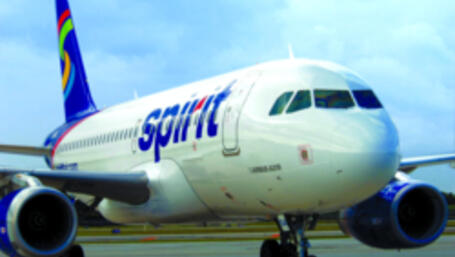
U.S.-based leisure carriers Allegiant Air and Spirit Airlines are exceptionally profitable but couldn't be more different in their aircraft acquisition policy and operating philosophy, including route selection, flight frequencies and aircraft utilization. Those factors affect their maintenance modus operandi, although both outsource heavy maintenance.

Mar 01, 2012
In 2005, airframe manufacturers determined that passive radio frequency identification (RFID) technology presented an opportunity to get timely access to maintenance histories for parts. Through the efforts of the Air Transport Association (now A4A) and SAE International, testing standards and data specifications are in place to support passive RFID for storing parts' history directly on the parts.

Mar 01, 2012
The low-hanging fruit in fuel efficiency, of course, is to make aircraft lighter. A piece of trivia cited on American Airlines' website illustrates the bottom-line impact of trimming down: “Removing just one pound of weight from each aircraft in American's fleet would save more than 11,000 gallons of fuel annually.”

Mar 01, 2012
ELG Carbon Fibre recycles carbon fibers with a patented process at its facility in West Midlands, U.K. Its commercial operation processes more than 2,000 tons of carbon composite waste per year from national and international companies. ELG Carbon Fiber will collect scrap from customers and from companies that wish to ship it. Suitable types of recyclable material include carbon composites reinforced with fabric or epoxy, vinylester and polyester. ELG can recycle dry fiber, pre-impregnated material that is cured or uncured and all monolithic CFRP laminates.

Feb 27, 2012
President Barack Obama has signaled that a new round has begun in the long-simmering dispute over commercial aircraft launch aid. This time, the target is not rival Airbus and Europe's governments. His sights are set on Canada, Russia and China—anyone who might siphon sales and jobs from Boeing's output into the industry's largest market segment, single-aisle jets.