
Latest Commercial Aviation Content by Aviation Week & Space Technology

Jan 23, 2012
“We're going to shrink to win.” Scott Donnelly, the chairman, president and CEO of Textron, is referring to his strategy of cutting the company's cost structure while simultaneously investing in new products and chasing new business. The question is whether he will ultimately be forced to execute that strategy on a larger scale. Textron, a 32,000-employee conglomerate and parent company of Cessna, Bell Helicopter, Textron Systems and Lycoming, has come under varying degrees of shareholder pressure for more than three years to sell off underperforming operations.
Jan 23, 2012
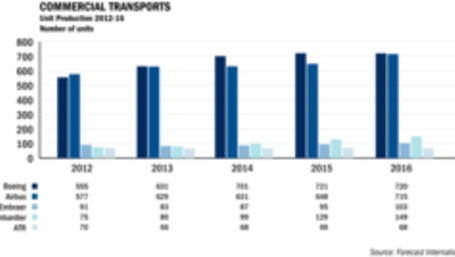
Combat Aircraft: Growing demand for stealth technology gives Lockheed Martin's F-35 a dominant position in the global fighter market, even if the U.S. cuts the number it buys. And where the F-35 leads, new trainers will follow. See pp. 49 and 54. Commercial Transports: They face new challengers this time around, but Airbus and Boeing rake in orders in a high-stakes struggle for the narrowbody market. Their airline customers warn of higher costs and lower profits in 2012. See pp. 76, 80, 86 and 88.
Jan 23, 2012
Boeing's 737 MAX announcement this past summer has set the stage for a titanic struggle over the narrowbody airliner market. The 737 MAX series is the company's answer to the new Airbus A320NEO family, launched in late 2010. Making things even more interesting is the appearance of other new narrowbodies such as the Bombardier CSeries, Comac C919 and Irkut MS-21.

Jan 23, 2012
Significant defense orders, strong government subsidies and growing demand for domestically produced commercial aircraft have provided optimism regarding the Russian aircraft industry.
Jan 23, 2012
An item in Washington Outlook in the Jan. 16 edition (p. 17) mischaracterized the position of the U.S. Chamber of Commerce on a union matter in the FAA reauthorization bill. The House version of the bill calls for reverting to the rules for how airline and railroad employees form unions that had been in existence for 75 years until the National Mediation Board changed them in 2010. The chamber supports the House bill's provision to reverse the recent rule change.
Jan 23, 2012
Few times in aerospace history can have been as difficult for forecasters as recent months. Things are changing, that is certain, but there are so many conflicting signs that the direction of the industry is almost impossible to project. Debt crises, oil prices, climate change, competition for resources and many other factors inject unprecedented unpredictability into the equation.

Jan 23, 2012
Driven by growth in passenger and cargo traffic, the global airline industry returned to profitability in 2010 after two years of financial losses. As a direct result, large turbine engine manufacturers have seen rebounding sales and full order books for new and existing engines.
Jan 23, 2012
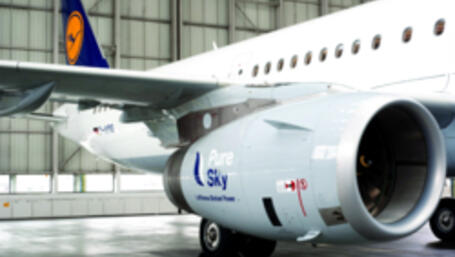
With crude oil beginning the year above $110 a barrel, and little prospect of aviation fuel prices coming down anytime soon, the imperative to find alternative sources to ensure price competition and supply security remains strong. But as 2012 progresses, industry is looking to governments to capitalize on the rapid technical progress made in approving bio-derived jet fuels by providing the funding support necessary to scale production up to commercial quantities and bring prices down to competitive levels.