
Latest Commercial Aviation Content by Aviation Week & Space Technology
Oct 14, 2013
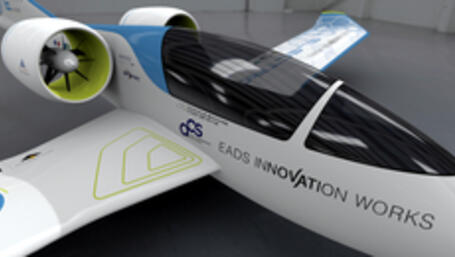
EADS working to make hybrid-electric a commercial reality
Oct 14, 2013
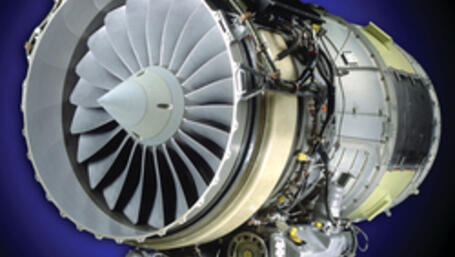
With the emergence of a new generation of large-cabin, long-range business aircraft, the industry could be witnessing a sea change in the traditional chicken-and-egg relationship between airframe and engine makers. Unlike previous generations, which use myriad bespoke engines derived from existing families, at least some of the new large business jets will be powered by purpose-designed powerplants, derived from the same all-new cores in development for the next generation of commercial airliners.
Oct 14, 2013
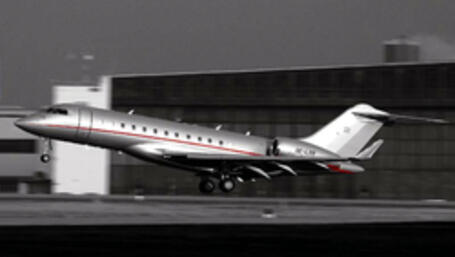
The story clearly seems too good to be true. A small, privately owned business jet operator places the biggest-ever order for large corporate jets and conquers the market with its not-so-unusual business model, while others complain about the continuing crisis in European business aviation.
Oct 14, 2013
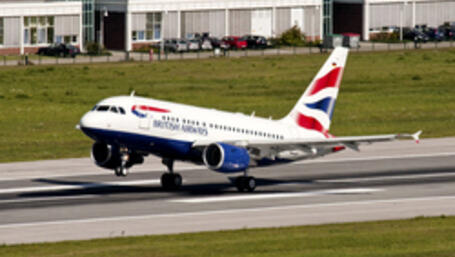
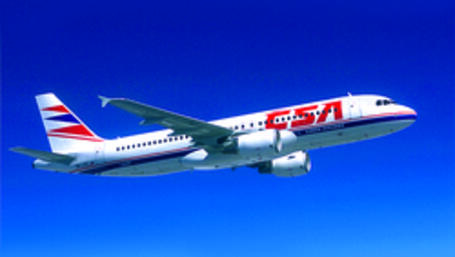
The A318 is a twin-engine, 107-132 passenger narrowbody jetliner. Initial flight occurred in January 2002. The European Joint Aviation Authorities (JAA) certified the A318 (with CFM56 engines) in May 2003; this was followed by FAA certification in June of that year. Deliveries began in July 2003 and continued through 2012, Airbus had produced 78 A318s. The A318 is powered by two 21,600-23,800-lb.-thrust turbofan engines, either the Pratt & Whitney PW6000 or CFM56-5B. Primary competition includes the Embraer 190 and 195, and Bombardier CSeries.
Oct 14, 2013
These models, along with the A318, make up the Airbus A320 family of twin-turbofan, narrowbody airliners. The initial model in the series was the A320, which made its first flight in February 1987. A320 deliveries began in 1988, followed by the stretched A321 in 1994 and the A319, a shortened variant of the A320, in 1996. All three original models are available with either CFM56 or International Aero Engines V2500 powerplants. The A319 typically seats 124 passengers, the A320 carries 150, and the A321 seats 185.
Oct 14, 2013
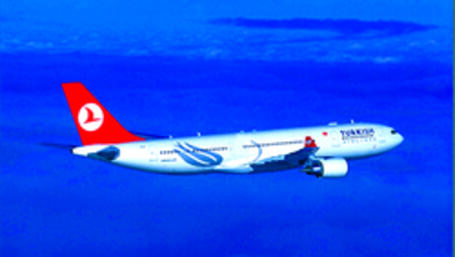
Airbus developed the A330 twin-engine, widebody commercial passenger transport to replace aircraft such as the A300, DC-10-10 and L-1011. An A330 prototype first flew in November 1992, with customer deliveries following in December 1993. Customers have a choice of turbofan engines in the 64,000-72,000-lb.-thrust class: the GE CF6-80E1, Pratt & Whitney PW4000 or Rolls-Royce Trent 700. Three A330 models are available. The A330-300 seats 335 passengers in two classes, or 295 in three classes. The A330-200 seats 293 in two classes, or 253 in three.
Oct 14, 2013
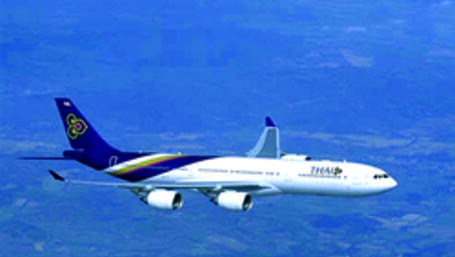
The A340 is a four-engine, intercontinental, widebody commercial transport aircraft. A prototype flew in October 1991, and deliveries began in January 1993. The A340-200 and-300 were certificated by the JAA in December 1992 and FAA in February 1993. Both models are powered by four 31,200-34,000-lb.-thrust CFM56-5C4 turbofan engines. Two newer models, the longer-range A340-500 and stretched A340-600, are powered by Rolls-Royce Trent 500 engines. Typical seating patterns for the -200, -300, -500 and -600 are 262, 295, 313 and 380 passengers, respectively.
Oct 14, 2013
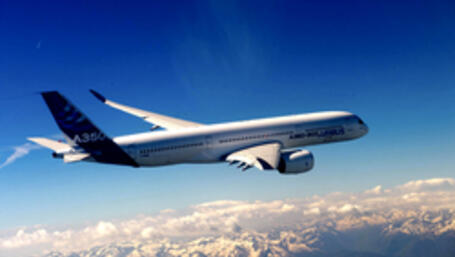
Currently in flight testing, the A350 is a twin-engine, widebody jetliner intended to compete with Boeing's 777 and 787. The A350 is powered by Rolls-Royce Trent XWB engines rated in the 75,000-97,000-lb.-thrust range, and will have a cruise speed of around Mach 0.85. Three basic versions are being marketed: the -800, -900 and -1000. Depending on the version, the A350 will seat 270-350 passengers, and will have a range of 8,100-8,500 nm. An ultra-long-range version, the A350-900R, and a freighter, the A350-900F, are also planned.