
Latest Commercial Aviation Content by Aviation Week & Space Technology

Oct 14, 2013
This single-turboprop-powered utility/passenger aircraft first flew in December 1982. Through 2012, Cessna produced 2,214 Caravans of all types. Designed with the small-package delivery segment in mind, Caravan models currently in production include the 675 and the 208B Grand Caravan. Both are powered by a Pratt & Whitney Canada PT6A-114A turboprop engine rated at 675 shp. Also in production is the upgraded Grand Caravan EX model, featuring a more powerful PT6A-140 turboprop engine. The EX achieved certification in January 2013.
Oct 14, 2013
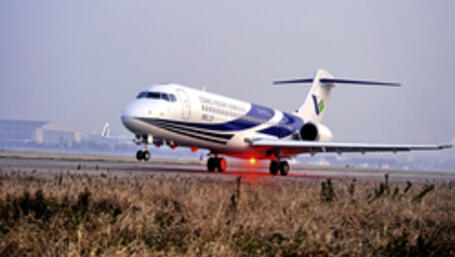
Initially, the new ARJ21 regional jet from Commercial Aircraft Corp. of China was to be available in the ARJ21-700 78-90-seat variant, while later introduction of the 98-105-seat ARJ21-900 is a possibility. Power is provided by two GE CF34-10A turbofans producing 18,500 lb. thrust each. Rollout of the ARJ21-700 occurred in December 2007, followed by first flight in November 2008. Four ARJ21s were built through 2012, and 103 additional examples are forecast for production through 2022. The ARJ21 faces competition from Bombardier and Embraer.
Oct 14, 2013
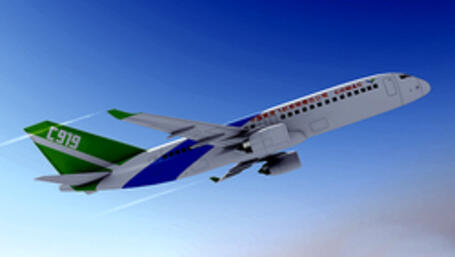
A twin-turbofan-powered, narrowbody commercial passenger transport aircraft, the C919 targets the Airbus/Boeing duopoly in narrowbody airliner sales. Variants include the baseline C919-200, which seats up to 168 passengers; the C919-100, a 130-seat model that will compete against the Airbus A319; and the C919-300, a 190-seat model designed to compete with Airbus's A321 and Boeing's 737-800/900. Comac has selected the CFM International Leap-1C engine, with 30,000 lb. thrust, to power the C919. Service entry is planned for 2016.
Oct 14, 2013
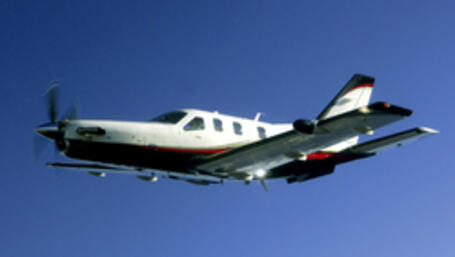
The TBM 850 is a single-engine, 4-6-passenger, turboprop-powered aircraft that replaced the TBM 700 in 2006. Power is provided by a single 850-shp Pratt & Whitney Canada PT6A-66D engine, flat-rated to 850 shp. The aircraft has a range of 1,585 nm. Through 2012, production totaled 299 aircraft. Production of another 421 is forecast for 2013-22.
Oct 14, 2013
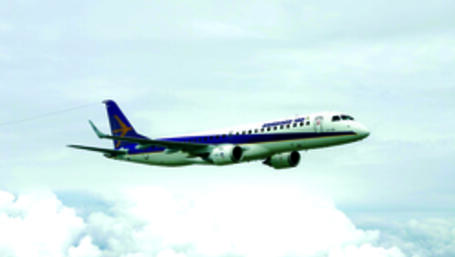
This is Embraer's E-Jets family of twin-engine, 70-132-seat regional jetliners. The 70-80-passenger 170 made its first flight in February 2002, followed by the larger 78-88-seat 175 in June 2003. The 170 and 175 share a common engine in the 14,200-lb.-thrust GE CF34-8E. The 94-114-seat 190 made its initial flight in March 2004, while the 106-122-passenger 195 first flew in December 2004. GE CF34-10E engines, rated at 20,000 lb. thrust each, power these models.

Oct 14, 2013
The ERJ 135/140/145 family is a series of twin-engine, 37-50-seat regional jets. The initial model was the 50-seat ERJ 145, which first flew in August 1995; deliveries began in late 1996. The next model was the 37-seat ERJ 135, which made its initial flight in July 1998 followed by deliveries in July 1999. The 44-passenger ERJ 140 first flew in June 2000, with initial deliveries in July 2001. All models use variants of the Rolls-Royce AE 3007A series turbofan.
Oct 14, 2013
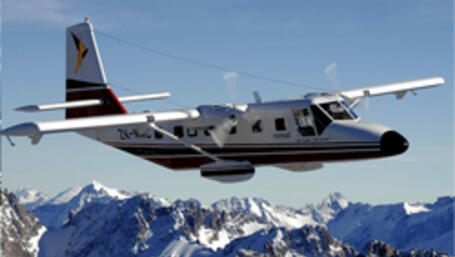
The Australian company GippsAero is developing a 10-seat turboprop aircraft, dubbed the GA10, that is powered by a Rolls-Royce 250-B17F/2 engine. The aircraft has a maximum takeoff weight of 2,154 kg (4,750 lb.). First flight of a GA10 developmental prototype occurred in May 2012. GippsAero is also developing the GA18 twin turboprop, a re-engineered version of the N24 Nomad. The GA18 is expected to feature upgraded engines, new propellers, a glass cockpit, weight-saving measures, reduced maintenance requirements and aerodynamic refinements.
Oct 14, 2013
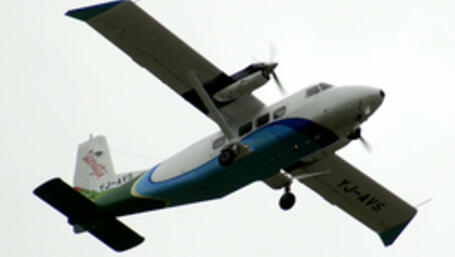
The Y-12 series is another family of twin-turboprop aircraft. The Y-12-II is equipped with Western avionics and Pratt & Whitney Canada PT6A-27 engines flat-rated to 620 shp each. The Y-12-IV has winglets, a strengthened undercarriage and redesigned seating for 18-19 passengers. Another Y-12 version is the Y-12E, which is powered by 750-shp PT6A-135 engines. A total of 48 Y-12-II/-IV and Y-12E aircraft are forecast to be produced for the civil market in the coming 10 years. HAI is currently developing the Y-12F, which is substantially different from the earlier Y-12s.