
Latest Commercial Aviation Content by Aviation Week & Space Technology
Jul 01, 2013
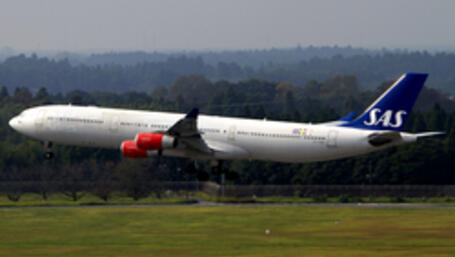
SAS made a bold decision to renew its entire long-haul fleet. But whether the airline will actually survive and be able to fund the investments, is beyond its control. That decision is made by the European Commission.

Jul 01, 2013
Until the mid-1990s, nearly 75% of all airline maintenance was performed in-house. In part, that was due to lack of credible alternatives, but it was also a vestige of the pre-deregulation period when maintenance and operations stood as essential and equal pillars of an airline's success, with cost being a far less important element than it is today.
Jul 01, 2013
Rank: 2nd, revenues greater than $6 billion Sales (12 months through Dec. 2012): $18.1 billion
Jul 01, 2013
Rank: 1st, revenues of $2-6 billion 2012 sales: $2.2 billion

Jul 01, 2013
The Eureka! moment of its creation came during a sit-down at a barbeque restaurant in Denison, Texas, back in 1991. As things turned out, there must have been magic wafting from the Jones Family BBQ firebox, because one of business aviation's greatest successes was served up that day along with the brisket, ribs and pulled pork.

Jul 01, 2013
Trials have begun on a series of optimized transatlantic flights which will test technologies and ideas destined for use in the next generation of air traffic management systems. Air traffic control organizations in Canada and the U.K. hope these “perfect” flights will offer fuel savings of up to half a ton per transatlantic sector and help reduce delays without increasing workload for pilots and controllers.

Jul 01, 2013
Mitsubishi and Embraer’s plans could violate U.S. airline contracts.

Jul 01, 2013
Differences in structure and timing between European and U.S. airspace transformation programs are keeping alive the spectre of divergent equipment and training solutions mucking up the transition to next-generation operations. These divergences could result in international airlines having to purchase, install and train pilots for separate avionics systems to be used in Europe, the U.S. and elsewhere, an outcome industry says will tip the equipage cost-benefit scales in the wrong direction.