
Latest Commercial Aviation Content by Aviation Week & Space Technology
Feb 11, 2013
Continued grounding poses growing program issues for Boeing

Feb 11, 2013
Has increasing difficulty keeping pace with Emirates' growth plans

Feb 11, 2013
Looking for ways to streamline busy oceanic routes.
Feb 11, 2013
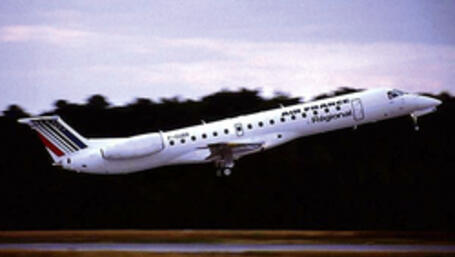
Hop!, Air France's new regional subsidiary scheduled to be established in the next few weeks, is the French legacy carrier's latest attempt to slash direct operating costs on its domestic/short-haul route system, lower fares and thwart discount competitors from acquiring a significantly bigger market share. The initiative confirms the emergence of an increasingly more aggressive strategy but one that is still not aggressive enough. Moreover, Air France is still paying the high price for adapting too late and too slowly to the deregulation of Europe's airline industry.
Feb 11, 2013
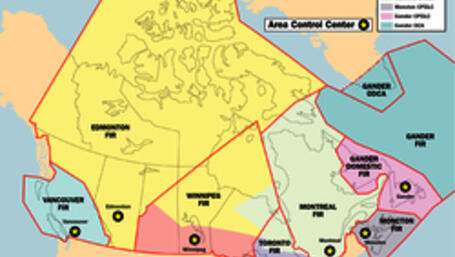
The nationwide rollout of a data communication network highlights that Nav Canada has a lead role in the global trend of shifting essential ground-to-air exchanges from voice to text. Nav Canada will this year complete the phased introduction of controller-pilot data link communications (CPDLC) throughout its high-altitude airspace. Nav Canada Chief Technology Officer Sid Koslow says that while CPDLC is hardly a new concept—the industry has been talking about it for at least 20 years—this will be its most extensive deployment for domestic airspace.
Feb 11, 2013
A satellite-based version of ADS-B is being developed that offers the potential to provide coverage across all Atlantic airspace, which could mean dramatic changes for oceanic ATM procedures. The Aireon system will rely on an Iridium satellite network instead of ground stations, so it can provide coverage beyond the range of terrestrial ADS-B ground stations. It is considered not suitable for busy domestic airspace, but a good solution for less-congested oceanic airspace.
Feb 11, 2013
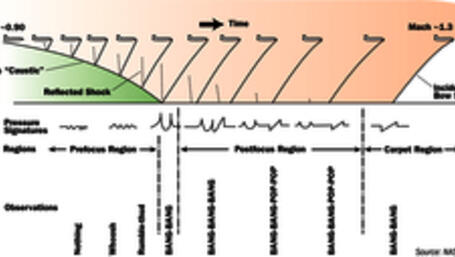
NASA and industry have made substantial progress in minimizing sonic booms by carefully shaping aircraft to control the shockwaves. But a sonic boom is a complex phenomenon, and what works in steady flight might not work so well at other times. Accelerating and turning can cause the shockwaves to focus, creating an amplified superboom. NASA is conducting flight research to determine if a shaped boom can survive the focusing, or if operating techniques must be developed to ensure a superboom never touches down where it can be heard.

Feb 11, 2013
Demand for pilots is expected to accelerate in the next couple of years as the U.S. economy gets back on its feet. But there are real questions about whether there will be enough qualified candidates to move into the cockpit. Not long ago, I was sure I would be one of them. But I've given up on my dream of becoming an airline pilot. I have run out of money and do not want to add to the debt I have taken on to pay for my college education and flight training for a job that is going to pay me $20,000 a year.