
Latest Commercial Aviation Content by Aviation Week & Space Technology

Sep 24, 2012
The ERJ 135/140/145 family is a series of twin-engine, 37-50-seat regional jets. The initial model was the 50-seat ERJ 145, which first flew in August 1995; deliveries began in late 1996. The next model was the 37-seat ERJ 135, which made its initial flight in July 1998; deliveries began in July 1999. The 44-passenger ERJ 140 first flew in June 2000, with initial deliveries in July 2001. All models use variants of the Rolls-Royce AE 3007 turbofan.
Sep 24, 2012
Ryanair is facing an increasingly hostile debate in Spain about alleged safety lapses after the airline was recently forced to divert several flights inbound to Spanish destinations. Its CEO, Michael O'Leary, is fighting back. Spanish Transport Minister Ana Pastor contacted the European Commission to call for more national oversight competencies within the EU. Pastor says “it is good to have lower fares, but we must not have lower safety standards.” The transport ministry added that the regulation should be changed within weeks.
Sep 24, 2012
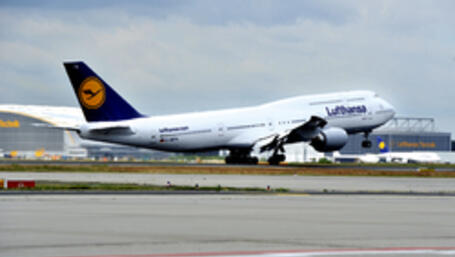
The 747 is an intercontinental widebody commercial transport aircraft powered by four turbofan engines. First flight and certification occurred in 1969. In February 2010, Boeing first flew aircraft in the new 747-8 series: the 747-8 Intercontinental and 747-8 Freighter. Both versions feature four General Electric GEnx-2B engines rated at 66,500 lb. thrust each. The 747-8I is stretched 5.6 meters (18.4 ft.) compared to the 747-400 to accommodate 467 seats in a three-class configuration.
Sep 24, 2012
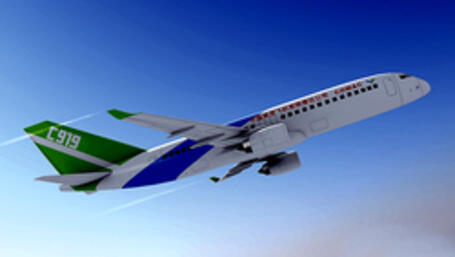
A twin-turbofan-powered, narrowbody commercial passenger transport aircraft, the C919 targets the international Airbus-Boeing duopoly in narrowbody airliner sales. Variants include the baseline C919-200, which seats up to 168 passengers; the C919-100, a 130-seat model that will compete against the Airbus A319; and the C919-300, a 190-seat model designed to compete with the A321 and Boeing 737-800/-900. Comac has selected the CFM Leap-1C engine to power the C919. Service entry has been planned for 2016, but development is taking longer than anticipated.
Sep 24, 2012
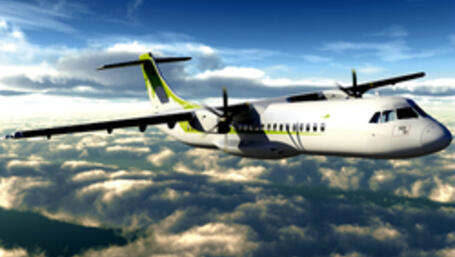
The ATR series are turboprop-powered regional transport aircraft. ATR is a joint venture of Alenia Aermacchi and EADS. The ATR 42 was first delivered in 1985 to Air Littoral, while the ATR 72 entered service in 1989. The latest versions are the ATR 42-600 and 72-600. The latter received EASA certification in May 2011. Both -600 variants are powered by a pair of Pratt & Whitney Canada PW127M engines, rated at 2,400-2,750 shp each. A total of 969 ATR-series aircraft were produced through 2011, with production of 681 forecast for 2012-21.
Sep 24, 2012
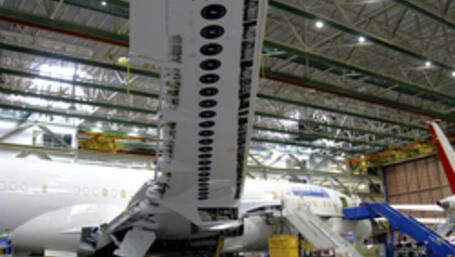
Mention aircraft structures and advanced materials and it brings to mind the heavy bones—the ribs, spars, planks and beams that make up the skeleton. But developments affecting the outer layers of the aircraft's skin—just millimeters deep, microns even—promise to have a huge impact on weight, cost and efficiency. The skin of an aircraft has taken on new importance with the move to composite airframes, which brings the need to add lightning-strike protection to the non-conductive carbon-fiber materials used in the place of aluminum.
Sep 24, 2012
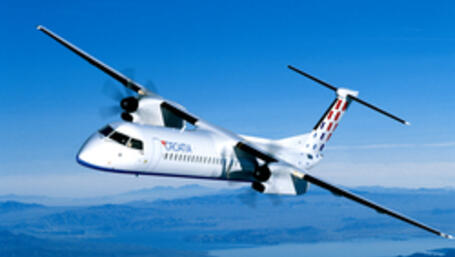
This twin-engine turboprop aircraft family initially was known as the Dash 8 series. The Q100, the original model, made its first flight in June 1983; first deliveries followed in October 1984. The Q100 carried 37-39 passengers and was equipped with 2,150-shp Pratt & Whitney Canada PW120/121 engines. Other models have included the 37-39-passenger Q200 (with 2,150-shp PW123C/D engines) and the 50-56-seat Q300 (with 2,500-shp PW123Bs). Production of the Q100, Q200 and Q300 has ended. The 68-78-seat Q400 (with 6,000-shp PW150As) remains in production.
Sep 24, 2012
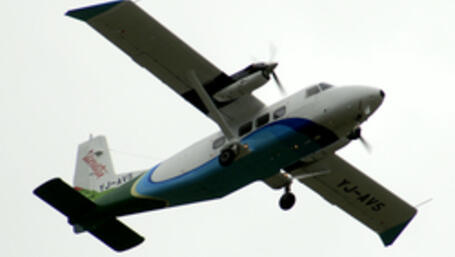
A 19-seat utility aircraft, the Y-12-II is equipped with Western avionics and Pratt & Whitney Canada PT6A-27 engines flat-rated to 620 shp each. The Y-12-IV has winglets, a strengthened undercarriage and redesigned seating. Another Y-12 version is the Y-12E, which is powered by 750-shp PT6A-135 engines. HAI is currently developing the Y-12F, which is substantially different from the earlier Y-12 designs. The Y-12F has a wider fuselage, retractable landing gear, and increased speed, range and payload.