
AW&ST HUB | AEROSPACE | DEFENSE | SPACE | COMMERCIAL AVIATION | MRO
Latest Space Content By Aviation Week & Space Technology
May 27, 2013
The U.S. National Oceanic and Atmospheric Administration (NOAA) is taking the unusual measure of activating an in-orbit Geostationary Operational Environmental Satellite (GOES) spare as experts try to rescue the primary spacecraft, which that has failed to transmit imaging and sounding data for a second time in less than a year.
May 27, 2013
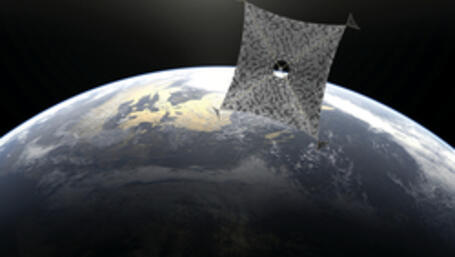
NASA’s 4,300-sq-ft behemoth is slated to fly next year.

May 20, 2013
The first Canadian command of the International Space Station ends safely with this May 14 parachute landing of Soyuz TMA-07M in southern Kazakhstan. Onboard were Canada's Chris Hadfield, the first of his countrymen to command an ISS mission increment; U.S. astronaut Tom Marshburn, and cosmonaut Roman Romanenko. Throughout Hadfield's nearly five months in orbit, the retired 53-year-old Canadian air force colonel exhibited his musical talents and skills as a photographer and with social media to share his experiences.

May 20, 2013
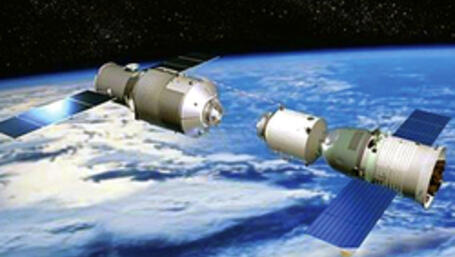
Setting down safely may be as difficult as getting there
May 20, 2013
Cold War model seen useful for U.S.-China space confrontation

May 20, 2013
President Barack Obama's fiscal 2014 budget proposal contains a brand-new idea that may be the most exciting and interesting one in the history of exploration—certainly since the Apollo project. Although, there is no Cold War or superpower rivalry to fuel it, the asteroid retrieval mission represents an opportunity to sustain American leadership in human space exploration with technological innovation and engineering prowess.
May 20, 2013
Scientists have “terabytes” of data from NASA's Kepler extra-solar planet-finder to analyze, but the failure of a second reaction control wheel on the space telescope probably means it will not be able to measure more of the faint flickers of distant stars when a planet passes in front of them.

May 20, 2013
U.S. Air Force controllers will slot an updated GPS satellite into the mid-Earth-orbit timing and navigation constellation following its successful launch May 15 on this United Launch Alliance Atlas V 401 from Cape Canaveral. Liftoff of the 3,600-lb. spacecraft came at the opening of its launch window at 5:38 p.m. EDT. The launch vehicle's Centaur upper stage ignited twice during the 3-hr. 24-min. mission and included a 3-hr. coast phase between burns.