
AW&ST HUB | AEROSPACE | DEFENSE | SPACE | COMMERCIAL AVIATION | MRO
Latest Space Content By Aviation Week & Space Technology

Jun 25, 2012
China continues to find itself shut out of the International Space Station, blocked by U.S. congressional anger over the way the nation treats its dissidents and regional separatists. But China takes the long view and its leaders appear willing to do whatever it takes to establish a Chinese presence in space eventually. Last week the crew of Shenzhou 9—mission commander Jing Haipeng, Liu Wang, the first Chinese woman in space, and Liu Yang—entered the Tiangong-1 spacecraft launched earlier (see photo).
Jun 25, 2012
ISS experiments enable advances in medicine, sciences and Earth monitoring

Jun 25, 2012
The U.S. Air Force Evolved Expendable Launch Vehicle (EELV) program is 50-for-50 with the liftoff June 20 of a classified payload for the National Reconnaissance Office on an Atlas V, notching a perfect record in 50 launches since August 2002. Here the Atlas V, a 401 configuration with a 4-meter payload fairing, lifts off from Space Launch Complex 41 at Cape Canaveral, with the NROL-38 payload. Liftoff was at 8:28 a.m. EDT, and the NRO termed the mission a success.

Jun 25, 2012
NASA Needs More CCDev Funds For 2017 Flight...............

Jun 25, 2012
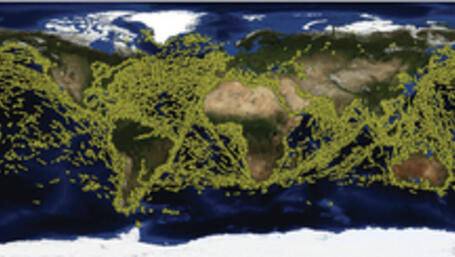
Every day, hundreds of aircraft traverse the world's busiest oceanic airspace over the North Atlantic, spending most of their journey out of range of existing surveillance technology. A planned global satellite-based service could change that, bringing the advantages of air traffic control to this vital corridor as well as to other areas lacking surveillance coverage.

Jun 25, 2012
The U.S. Air Force is gearing up to set another round of firsts with the pending third launch of the Boeing X-37B, but what those milestones may be will remain as much of a mystery as it has been with the recently completed second flight. Looking relatively pristine after its fiery reentry through the atmosphere, the second X-37B Orbital Test Vehicle (OTV-2) completed a record-breaking 15-month classified mission with a textbook autonomous landing at Vandenberg AFB, Calif., on June 16.
Jun 25, 2012
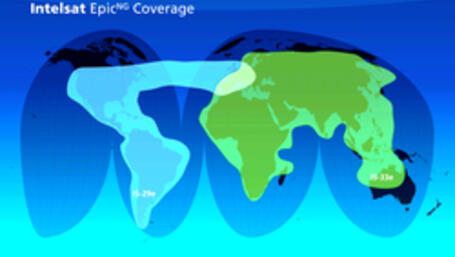
Intelsat makes mobile play with new satellite platform

Jun 25, 2012
In the mid-1990s, the U.S. government decided to merge its military and civilian polar-orbiting weather satellite programs, because they shared a number of similarities. The combination of future weather-satellite systems into a single program, designated the National Polar-orbiting Operational Environmental Satellite System (Npoess), was justified as a cost-saving measure. Consequently, military-civilian weather satellite ground control stations were integrated into NOAA facilities at Suitland, Md.