
AW&ST HUB | AEROSPACE | DEFENSE | SPACE | COMMERCIAL AVIATION | MRO
Latest Space Content By Aviation Week & Space Technology
May 28, 2012
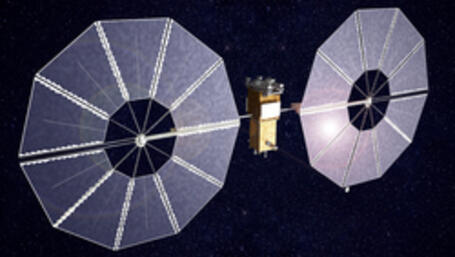
NASA is spending about $3 million on the initial SEP studies, originally set up by the technology element in the Human Exploration and Operations Mission Directorate.

May 21, 2012
On Jan. 17, Secretary of State Hillary Clinton announced that the U.S. would not sign the EU's Code of Conduct for Outer Space Activities. Instead, the U.S. would invite other spacefaring states, including members of the EU, to negotiate an International Code of Conduct for Outer Space Activities using the EU document as a launching point. The administration's new direction should not come as a surprise, but will prove counterproductive in achieving its own goals.
May 21, 2012
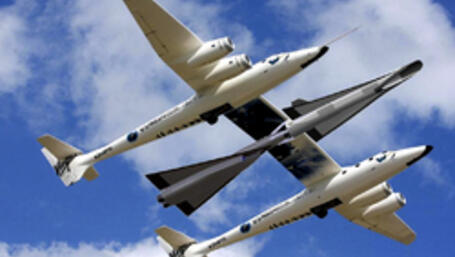
Growing interest in small satellites and the problem of how to launch them affordably could provide hypersonic system developers with a long-awaited first step on the way to reusable, routine access to space.

May 21, 2012
It has been almost 50 years since Mariner 2 became the first space probe from Earth to return scientific data from another planet. The swarms of ever-more-sophisticated robotic spacecraft that followed have changed our view of the planets around our Sun in ways that seem incredible today. On Aug. 27, 1962, when Mariner 2 lifted off for Venus, many scientists believed Earth's sunward neighbor was a steamy jungle planet beneath its clouds. Data from the two-channel microwave radiometer on Mariner 2 quickly disabused everyone of that notion. Passing within 22,000 mi.
May 21, 2012
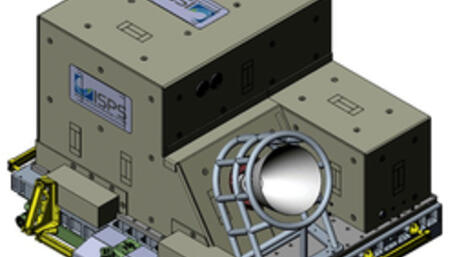
SpaceX will get an early opportunity to show what it can do to help scientists and engineers use the International Space Station by flying a powerful thruster testbed up in the unpressurized section of its Dragon cargo capsule.
May 21, 2012
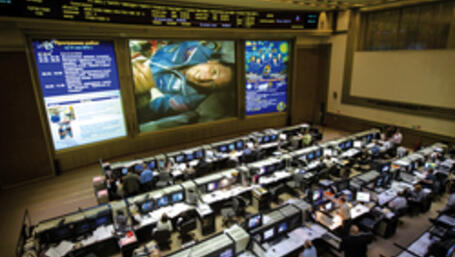
The International Space Station has a crew of six again, following launch and docking of Russia's Soyuz TMA-04M capsule with two cosmonauts and a NASA astronaut on board. The May 17 linkup restored the station to six-person operations for the first time since April 27, when a crew of three U.S. and Russian fliers descended to Earth after 5.5 months in orbit. Cosmonauts Gennady Padalka and Sergei Revin and NASA's Joseph Acaba (seen in this photo taken in the Russian space agency control room) lifted off from the Baikonur Cosmodrome in Kazakhstan on May 15.
May 21, 2012
Scientific and industrial research investments have yet to pay off.
May 14, 2012
Three Apollo commanders put their weight behind legislation that would force NASA to move quickly to choose a single commercial crew vehicle to elicit public support. Neil Armstrong, Eugene Cernan and James Lovell, commanders of Apollo 11, 17 and 13, respectively, told Rep. Frank Wolf (R-Va.), chairman of the House appropriations subcommittee that funds the space agency, that they endorse his panel's approach to commercial crew vehicle development that passed the House last week.