
AW&ST HUB | AEROSPACE | DEFENSE | SPACE | COMMERCIAL AVIATION | MRO
Latest Space Content By Aviation Week & Space Technology
May 07, 2012
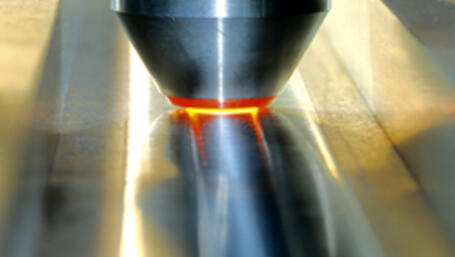
Friction welding fuses metals without melting them and is used in aerospace to join engine disks (rotational welding) or fabricate aircraft and spacecraft structures (friction-stir welding). Now hybrid components produced by linear friction welding of dissimilar metals promise to overcome a key disadvantage of composites: carbon fiber cannot be attached directly to aluminum because of galvanic corrosion, forcing use of higher-cost titanium. But friction welding can allow titanium to be incorporated into the join between aluminum and composite structures.
May 07, 2012
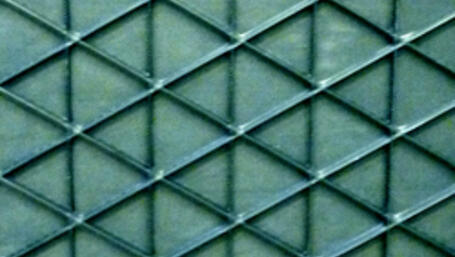
Isogrids are among the lightest and strongest of structures, the lattice pattern of integral stiffening ribs providing extremely high strength-to-weight ratios. Lightweight isogrid panels machined from aluminum plate to produce thin-walled, self-stiffened and damage-tolerant structures are used in launch vehicles and aircraft doors. Advanced grid structures made from composites have been used for components such as payload shrouds, but require time-consuming and costly manual layup. Isogrid Composites Canada Inc.
May 07, 2012
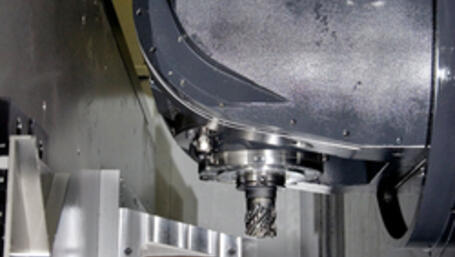
Composites may be replacing metals in aircraft structures, but the use of titanium is increasing both to reduce weight and because of the incompatibility of aluminum and carbon fiber. Boeing's 787 is 50% composite by structural weight, whereas its earlier 777 is only 12%, but a 787 contains almost 90 tons of titanium compared with 55 tons in a larger 777. And titanium can be around 10 times as expensive as aluminum, so pressure is on to reduce costs.

May 07, 2012
Nanotechnology-enabled materials are moving into aerospace. New Hampshire-based Nanocomp Technologies is scaling up production of electrically and thermally conductive yarn, sheet and tape made from long carbon nanotubes (CNT). Spun yarn is being used to replace copper in data cables in aircraft and spacecraft, potentially halving the weight of wiring harnesses. Sheet material was used on NASA's Juno spacecraft, launched in August 2011, to provide electrostatic-discharge protection of attitude-control thruster and main-engine components.
Apr 23, 2012
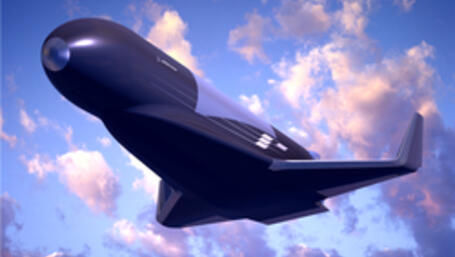
The USAF is taking the first steps toward a real capability as plans for a truly reusable, quick-response launch system come together.
Apr 23, 2012
Brazil is unusual among top-rated emerging markets because it can support manufacturing, services and natural resource development simultaneously. This is due, in part, to its low external and public debt, low unemployment, an enviable 90% literacy rate, expanding capital markets and declining poverty. And to top it off, the country is self-sufficient in water, food and energy. Brazil recently passed the U.K. to become the world's sixth-largest economy. By 2040, Goldman Sachs expects it to be fourth behind China, the U.S. and India.
Apr 23, 2012
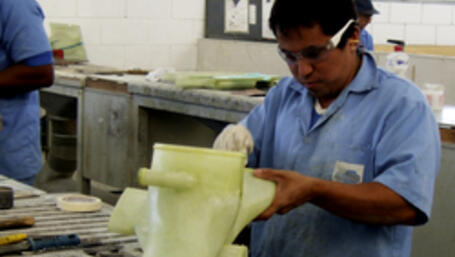
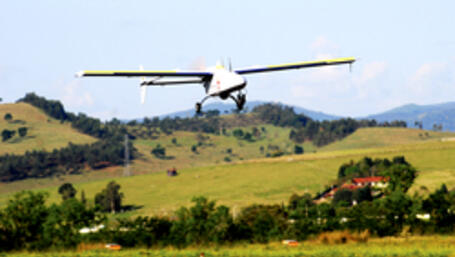
Brazil's new entrants in aviation design and manufacturing are specializing in niche markets for domestic consumption and are receiving support from industry, academia and government agencies.
Apr 23, 2012
One extra benefit will be the targeting problem posed for adversaries.