
AW&ST HUB | AEROSPACE | DEFENSE | SPACE | COMMERCIAL AVIATION | MRO
Latest Space Content By Aviation Week & Space Technology
Mar 19, 2012
Jilted by NASA, the European Space Agency (ESA) has decided to press ahead with its ExoMars program in partnership with the Russian space agency Roscosmos, which plans to contribute Proton launch vehicles and a new entry, descent and landing system to the ambitious two-pronged Mars mission in 2016 and 2018. Russia's arrival as the savior of ExoMars is not without cost, however, as ESA will now have to fund development of a rover for the 2018 mission that NASA had previously planned to share.
Mar 19, 2012
Government payloads riding piggyback on commercial spacecraft are likely to win only 1% of the worldwide satellite-market revenue in the next few years, as bureaucratic inertia and a “not-invented-here” mentality work against the potential cost savings.
Mar 19, 2012
Better sensors and more demand for the data they provide to troops on the ground will increase bandwidth needed.
Mar 19, 2012
Power-saving integrated circuits that extend battery life in portable electronics, and are being applied to military radios and investigated for avionics, are the overall winner of Aviation Week's 2012 Innovation Challenge, organized to bring new technologies and processes to the attention of aerospace and defense leaders.
Mar 19, 2012
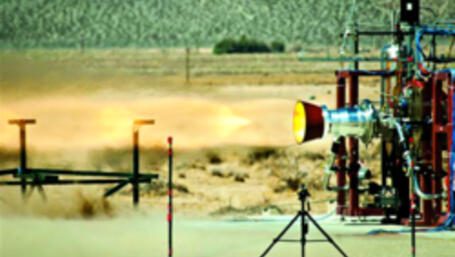
In the uncertain funded world of human spaceflight, the habit of die-hard propulsion engineers to never throw anything away is becoming increasingly useful as NASA looks for crew transports.

Mar 19, 2012
The world has changed in the slightly more than three years since the Kepler planet-finding spacecraft was launched into an Earth-trailing heliocentric orbit on a Delta II rocket. For starters, the Earth has 61 new cousins scattered around the universe, and another 2,321 new candidate-planets awaiting confirmation by astronomers as the real things.

Mar 19, 2012
In 1989, when Paul Graziani and two friends dreamed up what has become Analytical Graphics Inc., they sat in his living room envisioning a work environment where people could do their best work, creating new and bold things at a speed that would keep them happy and challenged. They would create commercial off-the-shelf analysis software for the security and space sectors, driving down cost while bringing the power of current and dynamic software to a non-consumer market.
Mar 19, 2012
Some astronauts who have spent extended periods in microgravity on the International Space Station (ISS) have developed abnormalities in their eyes and pituitary gland/brain connectors that are similar to a type of intracranial hypertension that occurs on the ground. The finding may help Earth-bound physicians understand what causes the potentially serious condition, but it already has NASA flight surgeons pondering how they can mitigate it when astronauts travel into deep space.