
Space Industry Analysis

Dec 31, 2012
It has been called the most significant advance in jet engines since the turbofan: development of variable-cycle “third stream” engines with 25% lower specific fuel consumption than today's fighter powerplants. General Electric and Rolls-Royce will ground-test demonstrator engines in 2013, and GE and Pratt & Whitney are under contract to mature the technology and test new adaptive-fan engine designs in 2016. In addition to the high-pressure core and low-pressure bypass streams of a conventional turbofan, these variable-bypass engines have a third, outer flowpath.
Dec 31, 2012
General Electric has confirmed it will purchase Italian aero engine specialist Avio SpA from Cinven, a European private equity firm, and government-owned defense group Finmeccanica for €3.3 billion ($4.36 billion).

Dec 31, 2012
Advances in rocket engine technology do not come along often, so it was noteworthy in October 2012 when Orbital Technologies flew a sounding rocket powered by its “vortex” engine, which injects fuel and liquid oxygen so the burning mixture does not touch the walls of the combustion chamber, allowing it to be thinner, lighter and cheaper. Oxidizer is injected at an angle that sets up a pair of coaxial vortices. Combustion occurs in the innermost swirl, the outer vortex protecting the chamber walls from the heat of combustion.

Dec 31, 2012
European government bickering scuttled a mega-merger of EADS and BAE Systems, and the Pentagon continues to hold firm against further consolidation among its top contractors. But consolidation amid second- and third-tier contractors is likely to accelerate as defense spending heads down in the U.S. and Europe.
Dec 31, 2012
NASA Space Launch System (SLS) advocate Sen. Kay Bailey Hutchison (R-Texas) is leaving Capitol Hill, but the program should get a boost by meeting an early test. An engineering board has cleared the first element of the heavy-lift rocket for preliminary manufacturing, keeping the program on track for a first flight with the Orion multipurpose crew vehicle in 2017.

Dec 31, 2012
Market shifts, new competitors bring change to launch-vehicle business
Aug 05, 2020
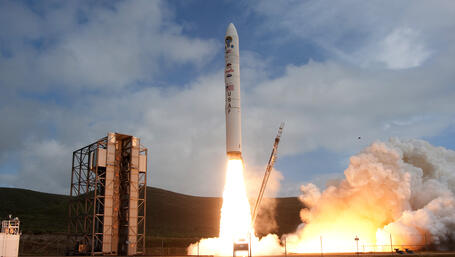
The U.S. Space Force’s 30th Space Wing and entities in California have entered into an agreement to develop a spaceport and boost commercial launch activity at Vandenberg AFB on the state’s Pacific coast.

Aug 05, 2020
SpaceX will fly a pair of SES’s new satellites on a Falcon 9 rocket in 2022, with an option for a second flight for an undisclosed third satellite. ULA will launch another two SES spacecraft on an Atlas V, also in 2022, SES announced.

Aug 05, 2020
A prototype Mars-class reusable spaceship developed by SpaceX took a nearly 500-ft (150 m) hop off a launch stand near Brownsville, Texas, on Aug. 4, marking the company’s first successful Starship test flight in a year.
Aug 04, 2020
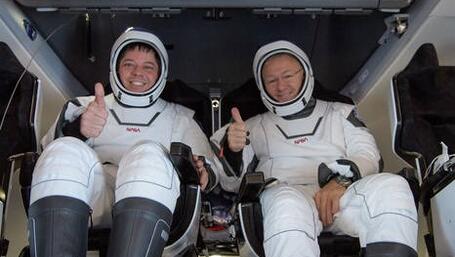
Astronauts Doug Hurley and Bob Behnken praised the NASA/SpaceX team behind their test flight and expressed hope the public/private partnership continues to thrive.

Aug 04, 2020
As it incorporates lessons learned from the abbreviated debut flight of its LauncherOne small satellite rocket, Virgin Orbit said Aug. 3 it is planning for a second demonstration mission before year’s end, with NASA agreeing to use the launch to put 11 experimental cubesats into orbit.
Aug 04, 2020
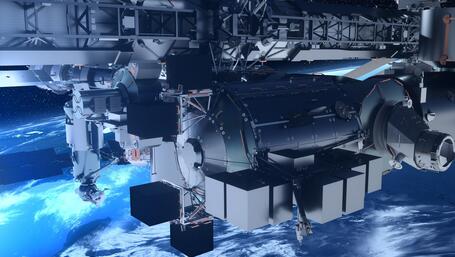
Bartolomeo, an external platform developed to commercially support scientific research and technology development payloads outside the International Space Station Space (ISS), should be ready to host its first projects by mid-2021, according to developer Airbus Defense and Space.

Aug 03, 2020
Small satellite launcher ABL Space Systems has disclosed around $90 million in new defense contracts plus investments from Lockheed Martin and venture capitalists, powering the startup through a three-launch demonstration of the RS1 launch vehicle and GS0 deployable launch system early next year, the company said Aug. 3.
Aug 02, 2020
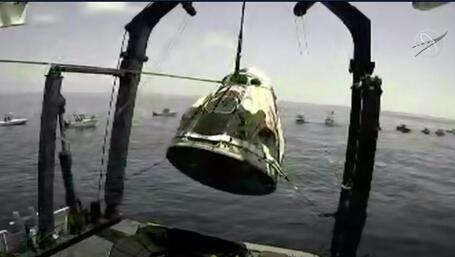
NASA astronauts Robert Behnken and Douglas Hurley, flying as test pilots for the SpaceX Demonstration Mission-2 (Demo-2), landed in flat seas and 2 mph winds at 2:48 p.m. EDT, capping NASA’s six-year effort to restore U.S. human orbital flight capability after the space shuttles’ retirement in 2011.