
Space Industry Analysis
Jul 22, 2013
A United Launch Alliance Atlas V lifted off July 19, carrying the second of the U.S. Navy’s new narrowband communications satellites. Liftoff occurred at 9:00 a.m. EDT from Cape Canaveral Air Force Station. The Mobile User Objective System (MUOS) satellite, made by Lockheed Martin, was lofted from an Atlas V 551, meaning it used a 5-meter fairing and five strap-on solid-rocket boosters. A 44-min. launch window opened at 8:48 a.m. EDT, but the launch was put on hold temporarily due to high upper-level winds.

Jul 22, 2013
Incorrectly installed angular rate sensors likely caused crash
Jul 19, 2013
Orbital Sciences Corp. reported a drop in revenue for the second quarter of this year — $333.1 million as compared to $371.3 million in the second quarter of 2012.
Jul 19, 2013
ELECTROSPRAY PROPULSION: Three organizations may get a chance to fly their electrospray microthrusters on a future orbiting testbed, following their selection for “game-changing” development grants from NASA’s Space Technology Mission Directorate. Picked to negotiate for grants are projects proposed by the Jet Propulsion Laboratory, Busek Company, Inc., of Natick, Mass., and the Massachusetts Institute of Technology.
Jul 19, 2013
SPACE SELFIES: NASA’s Messenger Mercury probe and Cassini Saturn explorer are maneuvering into place to image the Earth on July 19 and 20. Cassini will take its pictures between 2:27 p.m. and 2:42 p.m. PDT July 19, when the probe will be nearly 900 million mi. (1.5 billion km) from Earth. The portrait is part of a mosaic of images of the Saturn system backlit by the Sun, in which the viewing geometry allows for highly detailed study of Saturn’s famous ring system.

Jul 19, 2013
Already late, Webb telescope now faces technical problems.
Jul 19, 2013
Partisan gamesmanship continued in the House Science Committee during a July 18 markup, as Democrats mounted an account-by-account attack on the Republican majority’s NASA reauthorization bill. The committee approved the bill, authorizing the space agency for two years, starting at $16.9 billion in fiscal 2014.
Jul 19, 2013
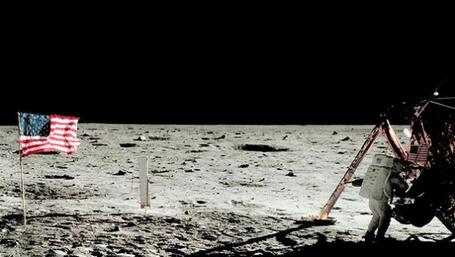
Forty years after landing on the Moon, Neil Armstrong explains why the Apollo program successes were not miraculous.