
Space Industry Analysis
Sep 27, 2012
HOUSTON — The already delayed departure of the European Space Agency’s ATV-3 cargo capsule from the International Space Station has been reset for Sept. 28 at the earliest to accommodate a potential station maneuver to steer clear of Russian satellite and Indian rocket debris. The avoidance maneuver of the station and its three-person crew was scheduled for Sept. 27 at 8:12 a.m. EDT, or about 2 1⁄2 hr. ahead of the projected closest approach of the satellite debris.
Sep 27, 2012
An industry team says that a protected satellite communications family of terminals has been developed at no cost to the U.S. Defense Department and is ready for production once a government agency certifies its cryptological system.

Sep 27, 2012
TOURS, France — The European Space Agency remains on the hunt for an alternate method of launching the Experimental Re-Entry Testbed (Expert) followin...
Sep 27, 2012
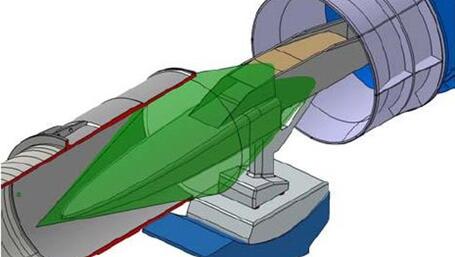
Full-scale wind tunnel tests of the European hypersonic technology demonstrator are poised to get under way in France
Sep 26, 2012
KAZAKH SATS: EADS space subsidiary Astrium has established Ghalam, a joint venture with Kazcosmos’ subsidiary Kazakhstan Garysh Sapary, to assemble, integrate and test satellites at a purpose-built facility in Astana, Kazakhstan, according to Kazcosmos chairman Talgat Musabayev. The venture will help fulfill Kazcosmos’ requirement for technology transfer and know-how as Astrium develops a pair of Earth observation satellites for the agency (Aerospace DAILY, May 6, 2011).
Sep 26, 2012
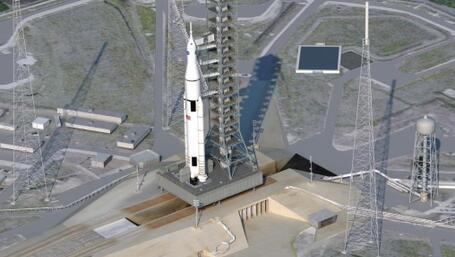
Still endorses the plans to modify Constellation Program Ares I hardware as most cost-effective approach
Sep 26, 2012
NASA may be able to return samples from Mars without significant international cooperation, in part by eliminating stovepipes in the way it organizes for scientific and human space missions.
Sep 26, 2012
HOUSTON — The B612 Foundation says it has made financial and technical strides in the first three months of the Silicon Valley non-profit’s bid to mount the world’s first private deep-space mission, a space telescope to greatly increase the identification of near Earth asteroids (NEAs) that could pose a collision threat.