
Space Industry Analysis
Sep 10, 2012
CHILL TEST: Results of a cold-temperature hot-fire test have qualified a new fixed nozzle for ATK’s GEM-60 strap-on solid-fuel booster for the United Launch Alliance Delta IV, as ATK continues to upgrade the 12-year-old design. In a test Sept. 6 at the ATK facility in Promontory, Utah, the 53-ft.-long GEM-60 was chilled to a core temperature of 30F before the 90-sec. burn, which generated about 270,000 lb. of thrust. In addition to qualifying the new fixed nozzle for flight, the test results validated the low-temperature performance of the new nozzle insulation.
Sep 07, 2012
Click here to view the pdf
Sep 07, 2012
NASA’s Dawn probe broke free of the pull of gravity from the asteroid Vesta early Sept. 5 and re-entered orbit around the Sun as its low-thrust xenon-ion propulsion system moves it on to the dwarf planet Ceres. With the change in orbit, which came at 2:26 a.m. EDT, Dawn started a transit through the Asteroid Belt that will take it to Ceres early in 2015. The spacecraft entered orbit around Vesta — exceeded in mass within the main belt only by Ceres — in July 2011, and spent 13 months studying the giant asteroid.
Sep 07, 2012
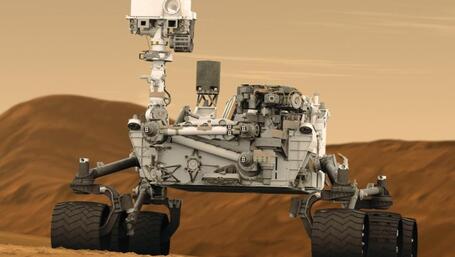
Operators at NASA’s Jet Propulsion Laboratory are starting the second and final phase of instrument checkout Curiosity's robotic arm
Sep 06, 2012
NEW DELHI — India has no plans to undertake a manned mission to the Moon in the near future, according to a senior government official.

Sep 06, 2012
Astronauts overcame a jammed bolt to secure a critical power system switching unit

Sep 06, 2012
Altius Space Machines is developing noncooperative capture technology for spaceflight applications
Sep 05, 2012
CLUSTER DISCOVERY: Adding evidence to how diverse the universe is, NASA’s Kepler planet-hunting satellite has observed the first instance of multiple planets orbiting two suns, what astronomers call a circumbinary planetary system. The system, named Kepler-47, is 4,900 light years from Earth in the constellation Cygnus. One star is the size of the Sun but only 84% as bright; the other star is diminutive. The inner planet, Kepler-47b, has a radius three times the size of Earth and orbits the two stars in just 50 days, making its surface too hot for life.