
Sustainability: Industry's Next Steps
Even before sustainability climbed up the global agenda, aviation had every incentive to cut its fuel consumption and therefore emissions. Although there has been real progress, there is also much work still to be done, and major challenges lie ahead for aviation.
These challenges will encompass not only new technology, including airframe and propulsion types that will make aviation cleaner and more efficient, but also a host of regulatory hoops through which the aviation community must pass.
Aviation Week Network continues to explore the ongoing initiatives underway.
Top story

Latest News & Analysis

Apr 22, 2021
Bye Aerospace has launched development of the eFlyer 800, an eight-seat, all-electric competitor to Textron Aviation’s Beechcraft King Air 260 turboprop.

Apr 22, 2021
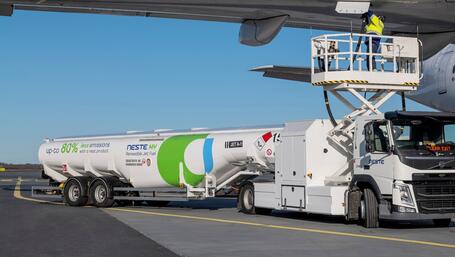
The airline group said it would achieve this by purchasing one million tons of sustainable jet fuel per year, which will allow it to cut its annual emissions by two million tons by 2030.
Apr 22, 2021
More than 25% of CO2 emissions from flights in Europe could be eliminated by 2030, but improvements in air traffic management will be required, says a “think paper” released by Eurocontrol.

Apr 21, 2021
An alliance has been launched with the goal of accelerating investment in sustainable aviation fuels by creating a certificate system that provides a standardized approach to verifying and tracking the emissions reductions from the low-carbon fuels.

Apr 21, 2021
Europe and Japan have launched a joint research program to advance the direct conversion of CO2 to sustainable aviation fuel (SAF).

Apr 20, 2021
The airline industry is keeping and, in some instances, raising its commitments to the environment through technologies, sustainable aviation fuels and improved operations and infrastructure.

Apr 13, 2021
United Airlines has launched a new endeavor with nearly a dozen other corporations to collectively purchase roughly 3.4 million gallons of sustainable aviation fuel (SAF) this year.
Apr 12, 2021
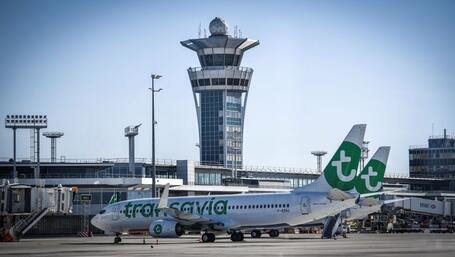
France has moved closer to banning short-haul domestic flights on routes than can be covered by train in under 2.5 hrs. as part of efforts to lower carbon emissions.